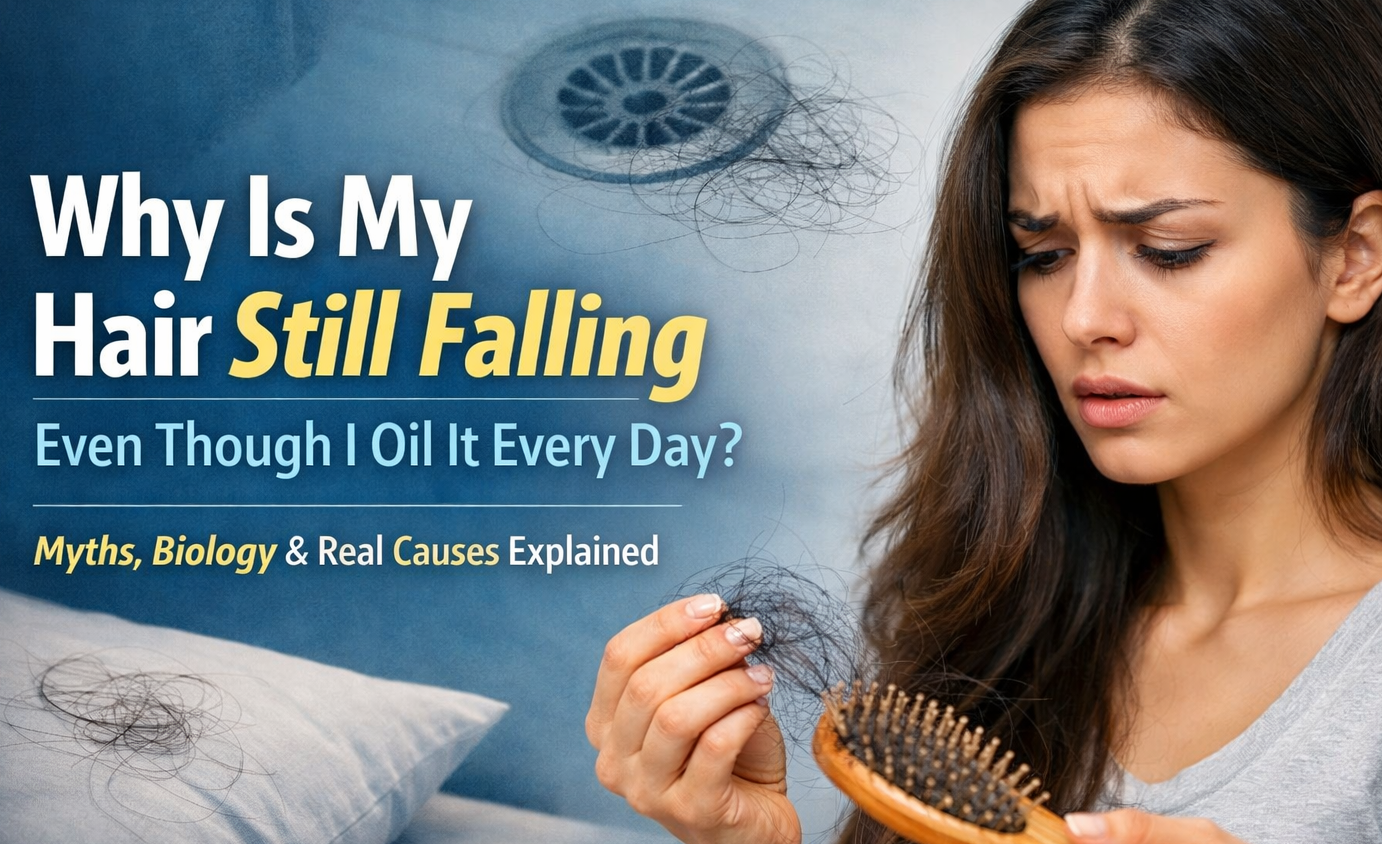
Why Is My Hair Still Falling Even Though I Oil It Every Day?
The real scientific reason behind hair fall — myths, biology, and actual causes
For generations, applying oil has been considered one of the most important steps in hair care. Many people grow up believing that daily oiling strengthens the roots, prevents hair fall, and leads to thicker hair.
But then something confusing happens.
Despite oiling regularly, you still notice hair on your pillow, in the shower drain, or stuck in your comb. This often leads to frustration and even anxiety.
So the real question is:
If oiling prevents hair fall, why is my hair still falling?
The simple truth is this:
Hair growth and hair fall are mainly controlled by internal biological processes — not by external oil.
To understand this properly, we need to first understand:
- What normal hair fall is
- When hair fall becomes a problem
- How hair actually grows
- Common myths about hair loss
- The real causes of hair fall despite oiling
Is Hair Fall Normal?
Yes — hair shedding is completely natural.
Your scalp has about 80,000 to 120,000 hair follicles, and each follicle follows its own life cycle. At any moment:
- Some hairs are growing
- Some are resting
- Some are shedding
Because of this cycle, losing 50–100 hairs per day is normal and does not reduce hair density. New hairs keep replacing the old ones.
When Should You Worry?
Hair fall becomes concerning if you notice:
- Your ponytail becoming thinner
- Visible scalp
- Receding hairline
- Thinning at the crown
- Excessive hair on pillow, comb, or floor
- Continuous heavy shedding for more than 2–3 months
At this point, the problem is usually not dryness or lack of oil.
It is typically caused by internal factors such as:
- Hormonal imbalance
- Nutritional deficiencies
- Genetics
- Stress
- Medical conditions
Daily oiling cannot override these biological processes.
Hair Structure: Why Oil Cannot Stop Hair Loss
Hair has two completely different parts:
- Hair Shaft (outside the skin)
- Hair Follicle (inside the skin)
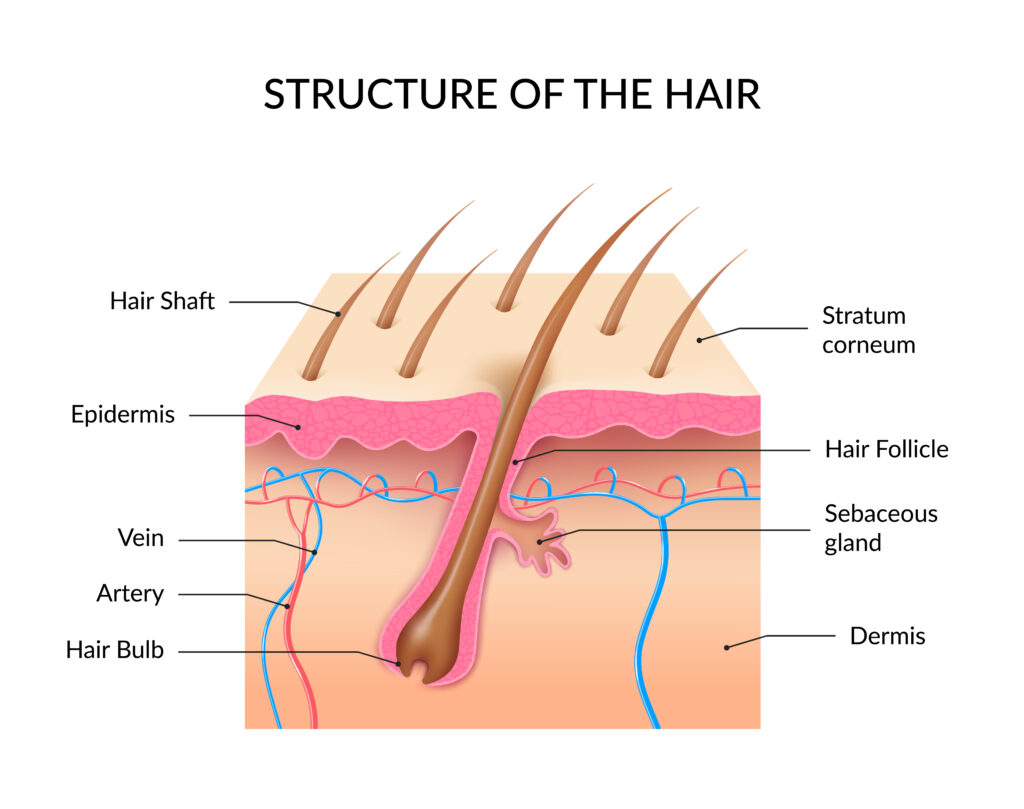
Understanding this difference explains almost everything.
The Hair Shaft (The Visible Part)
The hair you see and touch is called the hair shaft. It is made of keratin, a hard protein.
It has three layers:
- Cuticle (protective outer layer)
- Cortex (strength and color)
- Medulla (central core)
Here is the most important fact:
The hair shaft is dead tissue.
It has:
- No blood supply
- No nerves
- No living cells
Because of this, the hair shaft cannot receive nutrition.
Oil does not feed the hair.
Oil can only:
- Coat the surface
- Reduce friction
- Add shine
- Reduce breakage
So oil improves appearance, not growth.
The Hair Follicle (The Living Part)
The real hair organ lies under your skin — the hair follicle.
This living structure:
- Produces hair
- Responds to hormones
- Depends on nutrients
- Reacts to stress
Hair fall begins when this follicle becomes disturbed.
Dermal Papilla — The Growth Controller
At the base of the follicle is the dermal papilla. It supplies:
- Oxygen
- Nutrients
- Growth signals
If its blood supply weakens, hair becomes thinner and sheds earlier.
Matrix Cells — Hair-Producing Cells
These cells actually create the hair shaft. They divide rapidly and are extremely sensitive to:
- Iron deficiency
- Protein deficiency
- Illness
- Hormonal imbalance
- Stress
If they weaken, hair production decreases.
Sebaceous Gland
This gland produces natural scalp oil (sebum).
External oil does not control this gland.
The Hair Growth Cycle
Hair grows in four natural stages:
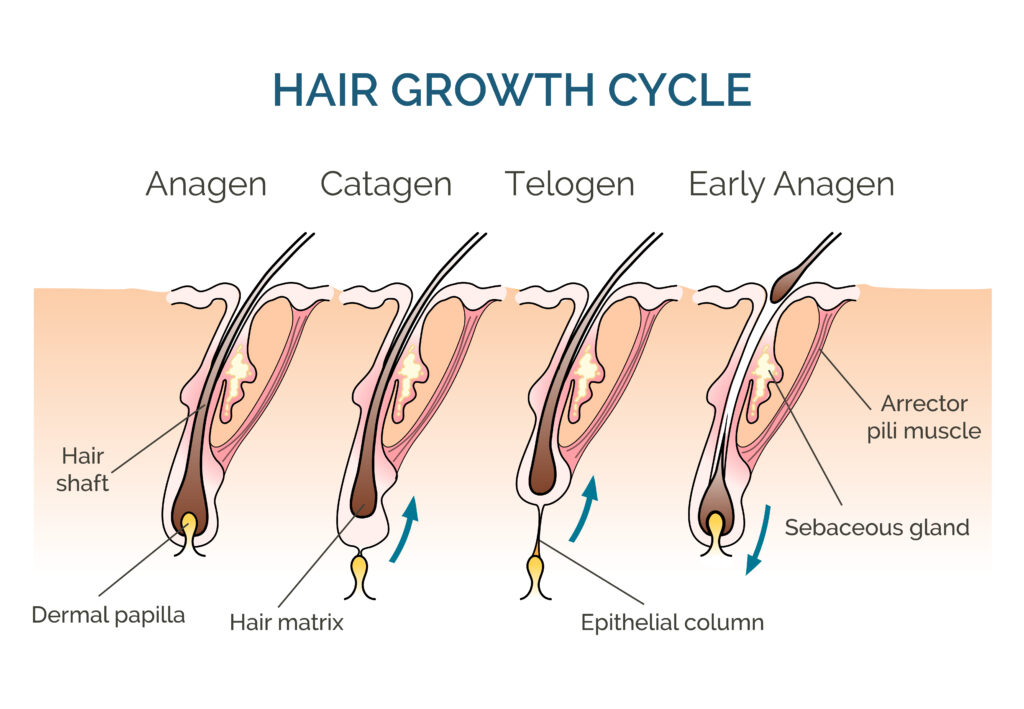
1. Anagen (Growth Phase)
Lasts 2–7 years. Hair actively grows.
2. Catagen (Transition Phase)
Growth slows and stops.
3. Telogen (Resting Phase)
Hair prepares to shed.
4. Exogen (Shedding Phase)
Hair falls out naturally.
Excessive hair fall happens when too many hairs enter the shedding phase early.
Common Hair Fall Myths (and the Truth)
Myth 1: Hair Fall Means Weak Roots
Truth: Shedding is normal and mostly controlled by hormones and genetics.
Myth 2: The White Bulb Means Permanent Hair Loss
Truth: The white bulb is a normal “telogen bulb.” It means the hair completed its life cycle.
Myth 3: Oiling Stops Hair Fall
Truth: Oil improves hair texture but does not control hormones or follicle health.
Myth 4: Shampoo Causes Hair Fall
Truth: Shampoo only releases hair that was already about to fall.
Myth 5: Cutting Hair Makes It Thicker
Truth: Thickness depends on the follicle, not hair length.
Myth 6: Biotin Stops Hair Fall for Everyone
Truth: It only helps if you are actually deficient — which is uncommon.
Myth 7: More Oil = More Hair Growth
Truth: Hair growth depends on nutrition, blood supply, and hormones. Excess oil may even worsen scalp problems.
Real Reasons Hair Falls Despite Daily Oiling
1. Hormonal Causes
- Genetic hair loss (DHT sensitivity)
- Thyroid disorders
- PCOS
- Post-pregnancy changes
2. Nutritional Deficiencies
- Iron deficiency
- Vitamin D deficiency
- Low protein intake
- Zinc deficiency
- Omega-3 deficiency
3. Stress and Lifestyle
Chronic stress raises cortisol levels and pushes hair into the shedding phase. Poor sleep and smoking also reduce blood flow to follicles.
4. Scalp Conditions
- Dandruff
- Fungal infection
- Inflammation
Over-oiling can worsen these conditions.
5. Medical Conditions
- Thyroid disease
- Autoimmune disorders
- Certain medications
6. Physical Damage
- Heat styling
- Chemical treatments
- Tight hairstyles
Hair Quality vs Hair Growth
Oiling helps:
- Smoothness
- Shine
- Protection
- Less breakage
But it does not control:
- Hormones
- Genetics
- Growth cycle
- Follicle health
The Final Truth
Hair fall is rarely caused by lack of oil.
It is usually caused by internal biological factors such as:
- Hormones
- Nutrition
- Genetics
- Stress
- Follicle health
Daily oiling can make hair look healthier and reduce breakage, but it cannot stop true hair loss.
Real hair fall control comes from supporting the hair follicle internally — not just applying oil externally.